

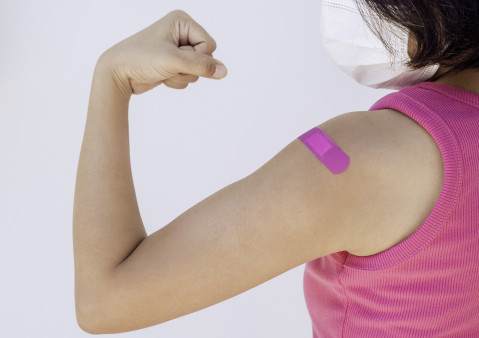
A single dose of the human papillomavirus (HPV) vaccine appears to provide as much protection as the currently recommended two doses for adolescents, according to findings from a nearly five-year study presented at the American Association for Cancer Research annual meeting (AACR 2025). A simpler schedule could encourage higher vaccination rates in the United States and worldwide.
“A lot of countries with very large birth cohorts of girls still have yet to introduce HPV vaccination,” said Aimée Kreimer, PhD, of the National Cancer Institute. “A global single-dose HPV recommendation should facilitate country introductions and vaccine uptake.”
HPV, a common sexually transmitted infection, triggers abnormal cell growth that can lead to genital and anal warts, precancerous cell changes and, if left untreated, cervical, genital, anal and oral cancer. The Gardasil 9 vaccine protects against nine high-risk HPV types.
In the United States, the Centers for Disease Control and Prevention (CDC) recommends the HPV vaccine for girls and boys at age 11 or 12, with catch-up vaccination through age 26. The goal is to vaccination adolescents before they become sexually active, but the vaccine is approved for adults up to age 45, and some older individuals may still benefit. The CDC recommends two doses of Gardasil 9, given six to 12 months apart, for people who start the series before age 15, and three doses for older teens and young adults.
But the U.S. is increasingly an outlier as more countries move toward fewer doses. In 2022, the World Health Organization (WHO) said that a single-dose schedule provides durable protection similar to that of two doses for adolescents and young women. The international health agency now recommends either one or two doses for girls ages 9 to 14 and women ages 15 to 20 and two doses for those age 21 and up. Giving fewer doses is logistically simpler and lets low- and middle-income countries stretch scarce vaccine supplies. Estimates suggest that only about a quarter of girls and young women have been vaccinated worldwide.
The updated global recommendation is supported by growing evidence that one dose is adequate. A study in Kenya, for example, found that a single dose of either Gardasil 9 or an older vaccine (Cervarix) that targets two high-risk HPV types, administered to young women ages 15 to 20, provided more than 97% protection against HPV 16 and 18, which together account for around 70% of cervical cancer cases. Likewise, a study in India found that receiving one, two or three doses of an earlier version of Gardasil that targets four HPV types (Gardasil 4) offered similar protection for girls and women ages 10 to 18. In the U.S., a study in Indianapolis found that although antibody levels were lower in women who received only one dose of Gardasil 4, protection against persistent HPV infection was still high.
The data reported at the AACR meeting come from a Phase III study in Costa Rica called ESCUDDO, sponsored by the National Cancer Institute (NCI). This follows an earlier NCI trial in that country that evaluated the safety and efficacy of three doses of Cervarix in nearly 7,500 women ages 18 to 25. As expected, the three-dose regimen was highly effective. However, about a fifth of the study participants ended up getting fewer doses, and they also appeared to be well protected. This was surprising, as protein subunit vaccines that contain pieces of the virus were thought to require a primer dose plus at least one booster to confer durable immunity, according to Kreimer.
ESCUDDO, launched in 2017, enrolled 20,330 adolescent girls ages 12 to 16. They were randomly assigned to receive one or two doses of either Cervarix or Gardasil 9. The vaccine recipients were followed every six months for five years, collecting cervical samples to test for HPV types 16 and 18. Near the end of the study, the researchers also evaluated 3,000 unvaccinated women to get a background estimate of HPV infection rates.
Here, too, one dose of either vaccine was as effective as two doses. For all regimens, vaccine protection against persistent infection (six months or longer) with HPV types 16 and 18 exceeded 97%.
While the largest and longest-running vaccine trials have looked at HPV infection rates, more recent studies show that vaccination also has clinical benefits, reducing the likelihood of precancerous cell changes and invasive cervical cancer. In fact, countries such as Australia and Scotland are on track to eliminate cervical cancer. The CDC recommended HPV vaccination for adolescent boys five years later than girls (2011 versus 2006), so data for them is less mature, but one recent study found that vaccination was linked to lower rates of mouth and throat cancer among young men.
In June, the CDC’s Advisory Committee on Immunization Practices will vote on whether to recommend a single-dose HPV vaccine schedule for the United States, after reviewing evidence at its meeting in April. Although vaccine supplies are adequate in the U.S., Gardasil 9 is expensive, and uptake has been suboptimal. In 2023, about 79% of adolescent girls and 75% of boys had gotten at least one HPV vaccine dose, with fewer receiving the full two-dose series, according to an analysis by KFF.
In an era of rising vaccine skepticism—and with new health secretary Robert F. Kennedy, Jr., casting doubt on the HPV vaccine’s safety—experts hope that recommending a single dose will encourage more parents to get their teens vaccinated. “It really is high uptake of HPV vaccines that is going to control these diseases,” Kreimer said.
Click here for more news about cervical, anal and oral cancer.
Click here for more news from AACR 2025.


Comments
Comments