

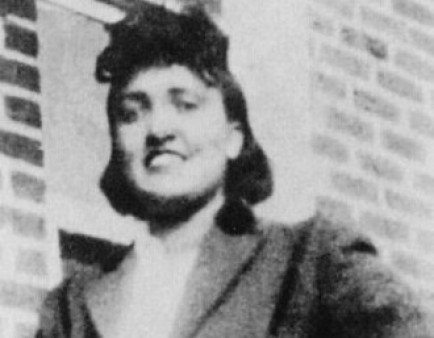
On February 26, Novartis and Henrietta Lacks’s estate settled a lawsuit alleging that Lack’s cells were taken and reproduced without her consent in 1951 while she underwent treatment for cervical cancer. The details of the settlement were not made public, and the agreement ends further litigation between Novartis and the Lacks family.
Novartis and the Lacks family said in a joint statement that they were pleased to have found a way to resolve the matter outside of court, but neither party is commenting further, according to The Associated Press (AP).
In February 1951, Henrietta Lacks, an African American mother of five living in Baltimore, went to Johns Hopkins Hospital seeking treatment for intense abdominal pain and irregular vaginal bleeding and was subsequently diagnosed with cervical cancer. Despite treatment, she died October 4, 1951 at age 31.
During treatment, researchers took a sample of her tumor without her written or verbal consent. The HeLa cells, as they were named (after the first two letters of her first and last name), proved to be a scientific breakthrough. The HeLa cells were the first cells capable of growing and dividing indefinitely in a laboratory (outside the body), making them “immortal.” The cells were mass-produced for profit without her family’s knowledge. Over 50 million metric tons of HeLa cells have been distributed around the world.
The HeLa cell line contributed to various scientific developments, including the COVID-19 vaccine, human papillomavirus (HPV) vaccine, the polio vaccine, in vitro fertilization and medications for HIV, hemophilia, leukemia and Parkinson’s disease. Their use also led to breakthroughs in chromosomal conditions, cancer and gene mapping.
Lacks’s story was made famous with the 2010 publication of the book The Immortal Life of Henrietta Lacks by Rebecca Skloot.
“Skloot narrates the science lucidly, tracks the racial politics of medicine thoughtfully and tells the Lacks family’s often painful history with grace,” wrote Lisa Margonelli, in the New York Times (NYT) Sunday Book Review. “She also confronts the spookiness of the cells themselves, intrepidly crossing into the spiritual plane on which the family has come to understand their mother’s continued presence in the world.”
Despite the money generated by the scientific breakthroughs of the HeLa cell line, it was decades before the Lacks family was compensated.
In 2013, the National Institutes of Health “made good” with the Lacks family, acknowledging Lacks’s contribution to science and removing her genome from the public domain, according to TheGrio. Though the acknowledgement involved no financial compensation, it marked a moral and ethical win.
In 2021, the Lacks family filed a lawsuit against Thermo Fischer Scientific over the stolen cells that was settled in 2023 with confidential terms. According to Baltimore news station WMAR, Thermo Fischer Scientific was the first among other biotech companies (Viatris inc., Novartis and Ultragenyx) to be sued by the Lacks estate. The lawsuits with Viatris and Ultragenyx are still pending.
Filed in 2024, the lawsuit against Novartis sought “the full amount of its net profits obtained by commercializing the HeLa cell line,” according to The AP.
“Novartis was aware that these cells were taken without consent,” the lawsuit said, according to the New York Times. “Despite this, Novartis never sought or received permission from the estate of Henrietta Lacks to use her cells, treating them as mere tools or resources.”
Discussing the Novartis settlement, Ben Crump, an attorney for the Lacks family, told the New York Times, “For the family and her grandchildren, this is certainly justice because people said they would never realize any benefit or compensation from her immortal HeLa cells, even though these pharmaceutical companies were profiting billions and billions of dollars.”
To read more about Lacks’s legacy and her family’s battle with compensation and acknowledgement, read:
- “NIH Acknowledges Family of ‘Immortal’ Human Cell Line,”
- “Henrietta Lacks’s Family Settles Lawsuit with Company That Used Cells Without Consent,”
- “Henrietta Lacks’s Family Joins the WHO Effort to End Cervical Cancer” and
- “Law to Honor Henrietta Lacks Would Encourage Diversity in Cancer Research.”



Comments
Comments