

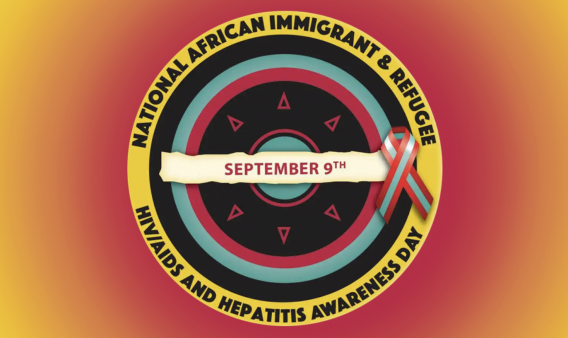
Tuesday, September 9, is National African Immigrant and Refugee HIV/AIDS and Hepatitis Awareness Day (#NAIRHHADay) 2025. The awareness day “aims to focus national and local attention on the highly prevalent health issues of HIV/AIDS and hepatitis B among the African immigrant and refugee population in the United States, in a culturally and linguistically appropriate manner,” according to organizers on NAIRHHADAY.org.
View this post on Instagram
A new toolkit available to download on the website offers resources, data and strategies that individuals and organizations can use to raise awareness and advocate for these health issues and African immigrant communities. And you can find further information, local events and sharable graphics by searching #NAIRHHADAY on social media. Sample posts are included throughout this article.
The toolkit offers several African proverbs that represent the wisdom and experiences of several African cultures—such proverbs “can be a good tool for raising awareness in a culturally and linguistically appropriate way,” the advocates note.
View this post on Instagram
Examples of proverbs and the actions they may inspire include:
- “Wisdom is like a Baobab tree; no one individual can embrace it” (Let’s work together to eliminate hepatitis B and HIV.)
- “A single bracelet does not jingle.” (We need your voice! Join the #NAIRHHADay movement.)
- “Sticks in a bundle are unbreakable.” (We are stronger together in the fight against hepatitis B and HIV.)
- “It is little by little that a bird builds its nest.” (Change is happening! Stay informed about the latest in cure and vaccine research.)
View this post on Instagram
The toolkit spells out demographics of African immigrant and refugee populations and the prevalence of HIV and hep B:
African immigrants represent the fastest-growing segment of the U.S. immigrant population, doubling in numbers every decade since 1970. As of 2019, over 2.1 million African immigrants resided in the United States, accounting for 5.1% of the total immigrant population. This growth rate has significantly outpaced overall foreign-born population increases, especially between 2010 and 2018 when the sub-Saharan African immigrant population grew by 52% compared to 12% for all immigrants.…
The largest African immigrant groups originate from Nigeria, Ethiopia, Egypt, Ghana, and Kenya. Geographically, they are concentrated in major metropolitan areas like New York City; Washington, DC; and Minneapolis. Significant populations also reside in Texas, California and Georgia
Although [Black Americans] comprise only 13.6% of the U.S. population (2020 census), they accounted for 40% of HIV incidence and prevalence in 2021. HIV diagnosis rates among African-born individuals are six times higher than the general population and nearly twice that of U.S.-born Black individuals. However, due to HIV surveillance methods failing to record individuals’ birthplaces, the rate among African immigrants is under-reported.…
Like HIV/AIDS, hepatitis B disproportionately affects African immigrants. It is a serious liver infection causing liver cancer. Researchers label HBV a “silent epidemic” due to its asymptomatic nature for years until serious liver damage occurs. Furthermore, hepatitis B is inaccurately surveyed among foreign-born groups, limiting prevalence data and hindering intervention strategies.
Estimates suggest 550,000 to 2.4 million U.S. residents live with hepatitis B, with 40%-70% being foreign-born. Approximately 15% of African immigrants are affected.
Despite these statistics, African immigrant and refugee communities face barriers to hepatitis B screening and care, including lack of awareness about the disease and its risks, language/cultural differences impeding communication, limited health care access due to financial constraints and lack of insurance, stigma/discrimination, and inadequate targeted outreach.
The Centers for Disease Control and Prevention (CDC) recommended in 2008 that all persons born in regions of the world with intermediate to high hepatitis B virus (HBV) infection rates, including most African countries, should be tested for hepatitis B. This recommendation is part of efforts to identify and manage chronic HBV infections among high-risk populations in the United States
View this post on Instagram
Click here to learn more about 2025 HIV and AIDS awareness days, and click here for a printable poster.
View this post on Instagram



Comments
Comments