

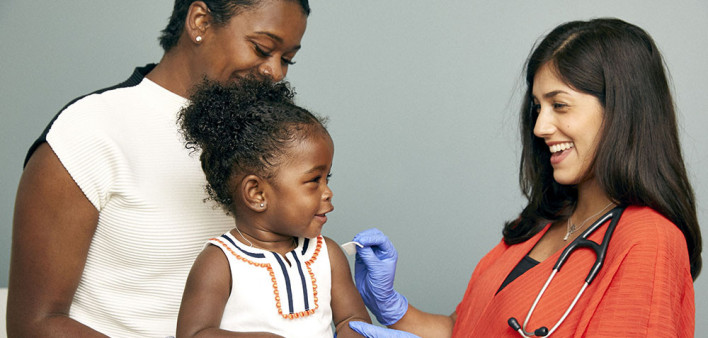
Measles cases are rising in the United States as vaccine hesitancy increases. While recent outbreaks have mainly affected children, people with HIV of all ages are potentially at risk, and a recent study suggests that many may not have adequate immune protection.
Measles is caused by a highly contagious airborne virus; about 90% of exposed unvaccinated people will contract the disease. The illness typically begins with flu-like symptoms, followed by a characteristic rash. There is no effective antiviral treatment or cure. While most people recover, some develop life-threatening complications, including pneumonia and encephalitis (brain inflammation). People with HIV, particularly those with a low CD4 T-cell count, are at greater risk for severe illness and death.
Early last year, a measles outbreak struck Texas, ultimately exceeding 700 cases. In South Carolina, an ongoing outbreak that started in October is approaching 1,000 cases, with little sign of slowing. According to the Centers for Disease Control and Prevention (CDC), a total of 2,280 confirmed measles cases were reported in 45 states in 2025, with more than 900 additional cases so far in 2026, resulting in three deaths (two children and one adult.)
The two-dose measles vaccine—usually given in the combination MMR formulation, which also prevents mumps and rubella—is 97% effective. The CDC recommends the vaccine for children at about age 1 and prior to starting school. Vaccination is also recommended for adults who do not have presumptive measles immunity, meaning documentation of prior vaccination, serological evidence of immunity (blood tests for antibodies), past measles infection or being born before 1957, when almost everyone was exposed and developed natural immunity. People who received an older, less effective vaccine in the 1960s should be revaccinated with the MMR vaccine.
U.S. childhood vaccination rates are slipping, and many health experts fear that changes to vaccine policy under Health and Human Services Secretary Robert F. Kennedy Jr.—a long-time vaccine skeptic—could lead to the loss of protection against measles. A high vaccination rate, estimated at 95%, is needed to maintain “herd immunity” in the population.
The federal government’s HIV guidelines recommend that all people with HIV should be assessed for measles immunity or prior vaccination. According to a study published last year in Clinical Infectious Diseases, many HIV-positive people may not be adequately protected.
Hayden Andrews, MD, of the University of Texas Southwestern Medical Center, and colleagues reviewed medical records from more than 13,600 HIV-positive people receiving care at a large Ryan White-funded clinic in Dallas between 2015 and 2025. Only 11% had presumptive immunity to measles. Among the 311 people who received serology testing, 82% had adequate antibodies—meaning 18% lacked immunity. People without measles antibodies were younger, more likely to be white and more likely to have a CD4 count under 200.
“Increasing measles immunity in people with HIV is essential given increasing outbreaks,” the study authors wrote. “While prior high levels of community immunity could offer protection to this vulnerable population, this can no longer be taken for granted.”
The guidelines say that HIV-positive people ages 1 year and older without presumptive evidence of measles immunity who are on antiretroviral treatment and have adequate immune function should receive two doses of the MMR vaccine, separated by at least a month. But antibody response may be reduced or wane more rapidly in people with HIV compared with their HIV-negative peers. If testing does not show adequate antibodies after two doses, clinicians can consider repeating the vaccine series, especially if the person was vaccinated when they did not have viral suppression.
The MMR vaccine is safe for HIV-positive people above age 5 with a CD4 count of at least 200, or a CD4 percentage of at least 15% in younger children. People with HIV should not receive an alternative combination vaccine that also protects against varicella, or chickenpox (MMRV). Because it contains weakened live virus, the MMR vaccine is potentially dangerous for people with severely compromised immunity. It is also not recommended during pregnancy. For such individuals, post-exposure prophylaxis using measles immunoglobulin within six days after exposure may be an option.

Comments
Comments