

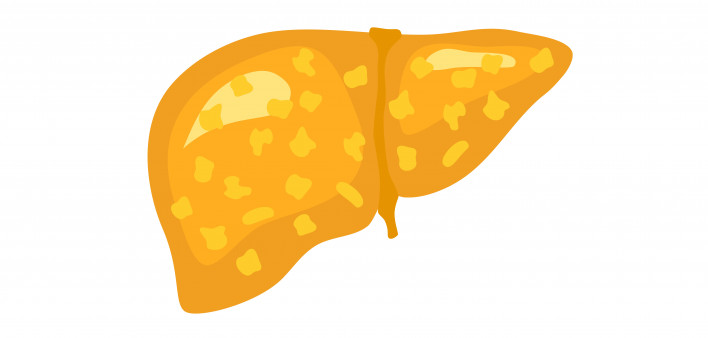
A newly validated waist-to-height ratio fat mass measure is a stronger predictor of liver steatosis and fibrosis than body mass index (BMI), according to a study published in the Journal of the Endocrine Society. These findings support a growing clinical shift in screening for obesity-related health risks. Unlike ultrasound, elastography and DEXA scans, waist-to-height ratio is a cheap and universally accessible tool for detecting the risk for fatty liver disease.
Metabolic dysfunction-associated fatty liver disease (MASLD) and its more severe form, metabolic dysfunction-associated steatohepatitis (MASH), are responsible for a growing proportion of advanced liver disease worldwide. Over time, steatosis—the buildup of fat in the liver—can lead to fibrosis, cirrhosis and liver cancer. Fatty liver disease is associated with obesity, type 2 diabetes and other metabolic conditions. With only two approved medications, management largely depends on lifestyle changes such as weight loss and exercise.
Body mass index, calculated using weight and height, is the traditional method for diagnosing obesity, but clinical guidelines have lately recommended verification with other measures, such as waist circumference, waist-to-hip ratio and waist-to-height ratio. Recent research suggests that waist-to-height ratio is a better indicator of total body fat mass and abdominal fat mass.
While studies have shown that obesity diagnosed using BMI is a risk factor for fatty liver disease, Andrew Agbaje, MD, MPH, PhD, of the University of Eastern Finland, sought to establish how well waist-to-height ratio categories could predict liver fat and fibrosis.
They calculated that high fat mass according to waist-to-height ratio was nearly twofold better at predicting liver steatosis than BMI-diagnosed overweight, while excess fat mass was a sixfold better predictor than BMI-diagnosed obesity.




Comments
Comments