

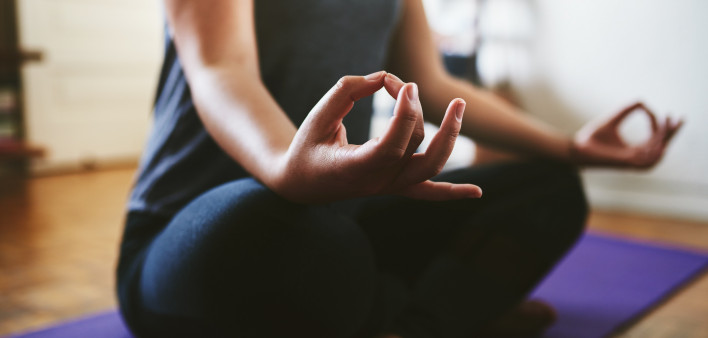
Anxiety, depression, fatigue and insomnia are among a long list of chronic side effects of cancer treatment. But a regular yoga practice may relieve many of these issues.
Specifically, a Phase III randomized controlled clinical trial titled Yoga for Cancer Survivors (YOCAS) found that “practicing yoga can reduce overall mood disturbance, anxiety and fatigue in cancer survivors, which can in turn lead to improvements in insomnia.” The research will be presented at the American Society of Clinical Oncology Annual Meeting (ASCO 2026) taking place May 29 to June 2 in Chicago.
“This large, randomized study shows that structured yoga may help relieve some of the most consistently reported and hard-to-treat issues in cancer survivorship, leading to decreased insomnia. It’s an important advance because it offers survivors, who are likely already managing multiple medications, a nonpharmaceutical solution for reducing four different side effects at once,” said Fumiko Chino, MD, a cancer researcher and associate professor in breast radiation oncology at MD Anderson Cancer Center in Texas and an ASCO expert in survivorship.
The study was led by Yuri Choi, PhD, RN, a research assistant professor at the University of Rochester Medical Center in New York.
As of January 2025, 18.6 million people were living with cancer or had a history of cancer, 4.5 million of whom have a history of breast cancer specifically. The American Cancer Society projects that by 2035, over 22 million Americans will be cancer survivors, including 5.3 million breast cancer survivors.
Long-term, or chronic, effects of cancer treatment are those that start during treatment and continue long after, while late effects of treatment are experienced months or years after treatment subsides. These long-term and late effects are different for everyone and may include problems concerning hearing, vision, bones, joints, muscles, heart, lungs, teeth, bowel, bladder or lymph nodes. Cancer survivors also report issues with memory, focus, sleep and mood.
“There is no single gold standard behavioral treatment available to survivors for treating overall mood disturbance, anxiety, fatigue and insomnia,” said Choi in a University of Rochester Medicine news release. “This trial helps fill that gap.”
In total, 410 people over age 21 and two to 24 months post–cancer treatment were recruited from 12 community-based oncology practices nationwide to participate in the study. Most participants were white women around age 54 who had survived breast cancer. The researchers used questionnaires to gauge mood disturbances and sleep difficulties.
The cancer survivors were randomized into two groups: standard care or standard care plus a YOCAS regimen. Standard survivorship care included follow up-visits, monitoring for side effects and maintenance therapy. YOCAS is a four-week intervention that includes two 75-minute instructor-led yoga sessions and an additional 30 minutes of at-home yoga per week. The yoga sessions are specifically designed for cancer survivors and incorporate hatha and restorative yoga poses, breathing exercises and mindfulness techniques.
Cancer survivors who participated in YOCAS practiced gentle yoga at low to moderate intensity about three times a week for an average of 180 minutes a week. They also reported less mood disturbance, less anxiety and less fatigue. Overall mood improvements by people who participated in YOCAS accounted for approximately 25% of the improvements in their sleep.
“Clinicians should not be afraid to recommend gentle yoga to their patients as they move into survivorship,” said senior author Karen Mustian, PhD, in the Rochester University news release. “People tend to enjoy it, and our research shows that after one month of restorative yoga a person may see huge improvements.”
Click here for more news about cancer survivors.
Click here for more reports from ASCO 2026.



Comments
Comments