

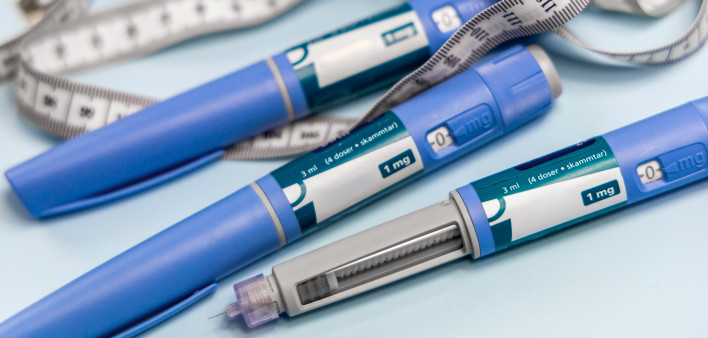
On August 18, the Food and Drug Administration (FDA) granted accelerated approval of Wegovy (semaglutide), in conjunction with a reduced-calorie diet and exercise, for people with metabolic dysfunction-associated steatohepatitis (MASH) who have moderate to advanced liver fibrosis but have not yet developed cirrhosis. It is the second medication—and the first GLP-1 agonist—to gain approval for fatty liver disease.
The accelerated approval is supported by results from the Phase III ESSENCE trial, which showed that nearly two thirds of participants who received weekly injections of Wegovy experienced MASH resolution without worsening fibrosis, while more than a third showed fibrosis improvement without worsening MASH.
“Today’s decision by the FDA reflects the continued progress in how we understand and treat patients with MASH, bringing us closer to care that meets the needs of people living with this disease,” lead investigator Arun Sanyal, MD, director of the Stravitz-Sanyal Institute for Liver Disease and Metabolic Health at Virginia Commonwealth University, said in a Novo Nordisk news release. “If left untreated, MASH can lead to serious and potentially fatal outcomes. The clinical evidence seen in ESSENCE underscores the promise of this approach to treating adults with MASH with moderate to advanced liver fibrosis.”
MASH, the new name for non-alcoholic steatohepatitis (NASH), is a leading cause of advanced liver disease. Estimates suggest that around 5% of people in the United States have MASH, and around a third have an earlier stage, metabolic dysfunction-associated steatotic liver disease (MASLD). Over time, the buildup of fat in the liver can lead to inflammation, fibrosis (liver scarring), cirrhosis, liver cancer and the need for a liver transplant.
Developing treatments for fatty liver disease has proved challenging, as numerous drug candidates that showed promise in early studies did not pan out in larger clinical trials. Last year, the FDA approved the first medication for MASH, Rezdiffra (resmetirom), but management still largely relies on lifestyle changes such as diet, exercise and weight loss.
As the new terminology suggests, MASH and MASLD are associated with obesity, type 2 diabetes and other metabolic abnormalities, making GLP-1 (glucagon-like peptide-1) agonists obvious candidates for treatment. These drugs mimic natural hormones that suppress appetite, regulate insulin and blood sugar and slow emptying of the stomach; they also appear to have anti-inflammatory effects. Semaglutide was originally approved in 2017 for type 2 diabetes, branded as Ozempic; it later received additional indications for obesity and cardiovascular risk reduction, branded as Wegovy.
The ESSENCE trial (NCT04822181) enrolled 1,197 adults with biopsy-proven MASH and moderate to advanced liver fibrosis (Stage F2 to F3). They were randomly assigned to receive Wegovy, administered as a 2.4 milligram subcutaneous injection once weekly, or a placebo along with counseling about a healthy lifestyle. An interim analysis of the first 800 patients with follow-up liver biopsies was done at 72 weeks. Results were presented at the 2024 AASLD Liver Meeting and published in The New England Journal of Medicine.
Sanyal and colleagues reported that 63% of Wegovy recipients experienced resolution of steatohepatitis (liver inflammation due to fat accumulation) without worsening fibrosis, compared with 34% in the placebo group. In addition, 37% in the Wegovy group saw a reduction in liver fibrosis without worsening steatohepatitis, compared with 22% in the placebo group. What’s more, about twice as many people taking Wegovy experienced both resolution of MASH and reduced liver fibrosis (33% versus 16%). Wegovy recipients also lost more weight and showed greater improvement in biomarkers of liver health.
Treatment was generally safe and well tolerated, but Wegovy recipients were more likely to experience gastrointestinal side effects, such as nausea, vomiting, diarrhea and constipation. Nonetheless, more than 80% stayed on the target dose for the full 72 weeks. The prescribing information for Wegovy includes warnings about thyroid cancer (which has been seen in rodent studies but not in human trials), acute pancreatitis, gallbladder and kidney problems, hypoglycemia (low blood sugar) and eye problems.
The second part of the study will follow participants long term to see whether Wegovy lowers the risk for clinical events such as cirrhosis and liver cancer. Therapies that receive FDA accelerated approval based on surrogate markers are expected to undergo further testing to confirm clinical benefits, and the agency can rescind approval if they fail to measure up.
More GLP-1 Meds and Earlier Treatment Under Study
Drugs with multiple targets are more effective for weight loss, and the same may be true for fatty liver disease.
Lilly’s dual GLP-1 and GIP (glucose-dependent insulinotropic polypeptide) agonist tirzepatide, sold as Mounjaro for diabetes and Zepbound for obesity and sleep apnea, has also shown promise for people with MASH and Stage F2 to F3 fibrosis. In the Phase II SYNERGY-NASH trial, up to 62% of tirzepatide recipients achieved MASH resolution without worsening of fibrosis, versus 10% in the placebo group, while up to 55% saw improvement of at least one fibrosis stage without worsening of MASH, versus 30% of placebo recipients.
In another Phase II study, people with MASH and mild to advanced fibrosis were randomized to receive survodutide, an experimental dual GLP-1 and glucagon agonist, or a placebo. Here, too, 62% of people assigned to the optimal dose of survodutide showed improvement in MASH with no worsening of fibrosis, compared with 14% in the placebo group, while 36% saw at least a one-stage improvement in fibrosis, versus 22% in the placebo group.
Several studies have tested GLP-1 and combination medications for people with MASLD who have not yet progressed to MASH and have little or no fibrosis
Another dual GLP-1/glucagon agonist, pemvidutide, reduced liver fat content by up to 69% in people with MASLD and no significant fibrosis, compared with 4% in the placebo group, and more than half achieved normal liver fat levels.
Drugs with three targets are also in the pipeline, including retatrutide, Lilly’s triple GLP-1, GIP and glucagon agonist combination. In a Phase II study, people with MASLD and minimal fibrosis who received the highest dose saw an 82% reduction in liver fat, while placebo recipients showed a slight gain.
Conversely, data suggest that GLP-1 agonists and related drugs may not work so well for people who have already developed liver cirrhosis. For example, a Phase II study of MASH patients with cirrhosis found that even a high dose of semaglutide did not lead to steatohepatitis resolution or fibrosis improvement.
These clinical trial results align with what clinicians are seeing in the real world. An analysis of data from the Veterans Health Administration looked at more than 16,000 people with diabetes and presumed MASLD who started a GLP-1 agonist or a different type of diabetes drug between 2006 and 2022. Those who used GLP-1 agonists had a 14% lower risk of developing cirrhosis, a 22% lower risk of cirrhosis complications (decompensation, liver cancer or liver transplant) and an 11% lower risk of death from any cause. People with established cirrhosis, however, saw limited benefit.
Taken together, this research shows that while GLP-1 agonists and combination drugs do a good job reducing weight and liver fat and slowing or halting liver disease progression, they may not be enough to manage advanced liver damage alone. Sanyal and other experts have suggested that people who have already progressed to advanced fibrosis or cirrhosis may also need liver-directed therapies, such as Rezdiffra (a selective thyroid hormone receptor-beta agonist) or one of the many medications in the MASLD/MASH pipeline, to reverse existing liver scarring.
For all their benefits, GLP-1 agonists and combination medications are not a panacea. Most require weekly shots, though oral options are nearing approval. They can cause side effects that lead to treatment discontinuation and can lead to loss of muscle, bone and organ tissue as well as fat. To achieve optimal results, patients should also reduce their calorie intake and increase physical activity.
Cost is also a concern. Wegovy and Zepbound can run upwards of $1,000 per month. (Rezdiffra, in comparison, costs around $4,000 per month.) Many private insurers, state Medicaid programs and Medicare do not cover these medications for weight loss alone, though the added indication for MASH could potentially expand access.
Click here for full prescribing information for Wegovy.
Click here for an overview of GLP-1 agonists for MASLD and MASH.
Click here for more news about fatty liver disease.


Comments
Comments