

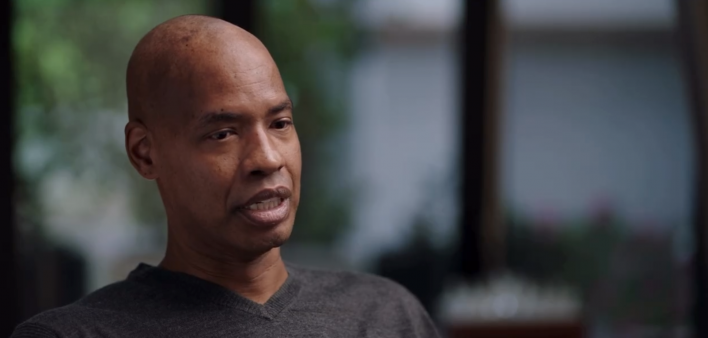
UPDATE: Basketball icon Jason Collins, the first openly gay NBA player, has died of glioblastoma, a form of brain cancer, according to a statement from the NBA. He was 47. Collins played for six teams over a 13-year NBA career, and he disclosed that he is gay during a Sports Illustrated cover story in 2013.
“Jason Collins’ impact and influence extended far beyond basketball as he helped make the NBA, WNBA and larger sports community more inclusive and welcoming for future generations,” said NBA commissioner Adam Silver in the statement. “He exemplified outstanding leadership and professionalism throughout his 13-year NBA career and in his dedicated work as an NBA Cares Ambassador. Jason will be remembered not only for breaking barriers, but also for the kindness and humanity that defined his life and touched so many others.
“On behalf of the NBA, I send my heartfelt condolences to Jason’s husband, Brunson, and his family, friends and colleagues across our leagues.”
You can read an ESPN article on his passing, written by Collins’ friend Ramona Shelburne here. Below is a related post:
View this post on Instagram
The NBA news item also included a statement by the family of Collins. “Jason changed lives in unexpected ways and was an inspiration to all who knew him and to those who admired him from afar,” the family says. “We are grateful for the outpouring of love and prayers over the past eight months and for the exceptional medical care Jason received from his doctors and nurses. Our family will miss him dearly.”
Last December, Collins published an essay on ESPN.com sharing his cancer diagnosis and his efforts to seek experimental targeted chemotherapy in Singapore.
Below is our original December 16, 2025, article on his cancer announcement:
“I have Stage 4 glioblastoma, one of the deadliest forms of brain cancer,” wrote basketball icon Jason Collins in a candid essay published December 11 on ESPN.com. “As an athlete you learn not to panic in moments like this. These are the cards I’ve been dealt.… We aren’t going to sit back and let this cancer kill me without giving it a hell of a fight.”
His battle includes traveling to Singapore for an experimental targeted chemotherapy, he explained in the essay as well as in a video made with sports journalist Ramona Shelburne, who has known Collins since they were in high school. You can view the video on Shelburne’s Instagram (below) and ESPN’s YouTube channel (at the top of this article)
View this post on Instagram
Collins, who played center for six teams during his 13-year NBA career, is no stranger to breaking barriers and overcoming challenges in the public arena. In 2013, at age 34, he came out in a Sports Illustrated cover story, making him the first openly gay NBA player.
In his ESPN essay, Collins shared that “in May I married the love of my life, Brunson Green, at a ceremony in Austin, Texas, that couldn’t have been more perfect.” By August, Collins began to experience odd symptoms, such as a loss of short-term memory and mental clarity. Tests quickly revealed the culprit: glioblastoma, with a brain tumor shaped like a hydra and a genetic makeup that made it hard to treat.
Despite the diagnosis, the couple celebrated a birthday in November with a stay on Bintan Island, Indonesia:
View this post on Instagram
In his ESPN essay, Collins elaborated on his diagnosis and treatment:
“Due to my tumor’s genetic makeup, the standard temozolomide (TMZ) chemotherapy for glioblastoma doesn’t work on it. Currently I’m receiving treatment at a clinic in Singapore that offers targeted chemotherapy — using EDVs — a delivery mechanism that acts as a Trojan horse, seeking out proteins only found in glioblastomas to deliver its toxic payload past the blood-brain barrier and straight into my tumors.
“The goal is to keep fighting the progress of the tumors long enough for a personalized immunotherapy to be made for me, and to keep me healthy enough to receive that immunotherapy once it’s ready.
“Because my tumor is unresectable, going solely with the “standard of care” — radiation and TMZ — the average prognosis is only 11 to 14 months. If that’s all the time I have left, I’d rather spend it trying a course of treatment that might one day be a new standard of care for everyone.”
In fact, according to the Glioblastoma Foundation, the prognosis for this type of cancer is “generally very poor” with only 5% of patients surviving five years after diagnosis, although age, gender, genetic makeup and other factors contribute to outcomes.
Glioblastoma is the most common type of primary brain cancer, meaning a cancer that originates in the brain as opposed to cancer that has metastasized, or spread, to the brain from cancer in another area of the body.
About 12,000 people are diagnosed with glioblastoma a year, according to MD Anderson Cancer Center. There is no cure.
To learn more, check out the Cancer Health Basics on Brain Cancer. It reads in part:
What is brain cancer?
Cancer develops when cells grow out of control. There are several types of primary brain cancer (meaning they start in the brain), with the most common being gliomas and glioblastomas, meningiomas, pituitary adenomas, schwannomas and medulloblastomas. Most of these names relate to where in the brain they are located.
Who gets brain cancer?
Brain cancer is uncommon, and the lifetime risk of developing a malignant tumor of the brain or spinal cord is less than 1%. About 23,800 brain and spinal cord cancers are diagnosed in the United States each year, and about 16,700 people die of these cancers annually, according to the American Cancer Society.
Slightly more men than women develop brain and spinal cord cancer. In the United States, this translates to about 13,450 men and 10,350 women annually. In children, brain tumors are the second most common type of cancer, accounting for 25% of childhood cancers. People in different age groups have an increased risk for developing specific types of brain cancer. For example, low-grade gliomas are more likely to occur in younger people, while high-grade glioblastomas are more common in adults over 40.
What are the risk factors for brain cancer?
Many types of brain cancer have no known risk factor, and in most cases there is no clear cause. Genetic factors, environmental toxins, radiation to the head and cigarette smoking have all been linked to cancers of the brain and spinal cord. Some inherited diseases, such as neurofibromatosis and retinoblastoma, increase the risk for central nervous system tumors. HIV infection is also associated with an increased risk for some brain cancers.
What are the symptoms of brain cancer?
Many brain tumors do not cause symptoms. Some are found accidentally if brain imaging with a computed tomography (CT) or MRI scan is done for another reason. When symptoms do occur, they vary depending on which part of the brain or spinal cord is affected. Common symptoms may include:
• Headache
• Weakness or paralysis
• Nausea or vomiting
• Clumsiness or lack of coordination
• Difficulty walking
• Seizures
• Changes in vision, hearing, touch or taste
• Speech problems
• Mood, personality or behavior changes
• Mental confusion, trouble concentrating or memory problems.
Many people with brain cancer do not develop symptoms until its late stages, when it is harder to treat.
How is brain cancer treated?
Treatment for brain and spinal cord cancer varies depending on the type of tumor, the symptoms it causes and other medical conditions. It also depends on how advanced the cancer is when it is detected, how many tumors there are and how large they are.
People with brain cancer may need to see several specialists, such as neurosurgeons (nerve and brain specialists), oncologists and radiologists. Other people on the health care team may include nurse oncologists, physiotherapists, pharmacists, psychologists, dietitians and social workers.
Surgery: Some small and localized brain tumors can be surgically removed; this is known as resection.
Radiation: Radiation may be used to kill any cancer cells that remain after surgery or to shrink tumors that cannot be surgically removed. It is often used in conjunction with other forms of treatment.
Chemotherapy: Traditional chemotherapy works by killing fast-growing cells, including cancer cells. It can also destroy rapidly dividing healthy cells, such as those in the gut or hair follicles, leading to side effects like nausea and hair loss. In some cases, chemotherapy is directly administered into the brain or spinal cord.
Targeted therapy: Targeted drugs work against cancers with specific characteristics. For example, they may interfere with signaling pathways that regulate cell growth. Targeted treatment is often better tolerated than chemotherapy, but cancer may develop resistance over time.
Immunotherapy: The newest type of treatment helps the immune system fight cancer. For example, some tumors can turn off immune responses against them, and drugs known as checkpoint inhibitors can restore T cells’ ability to recognize and destroy cancer cells. Immunotherapy has shown promising results for some types of brain cancer. However, current immunotherapy drugs work for only a subset of patients, and it is hard to predict who will benefit.


Comments
Comments