

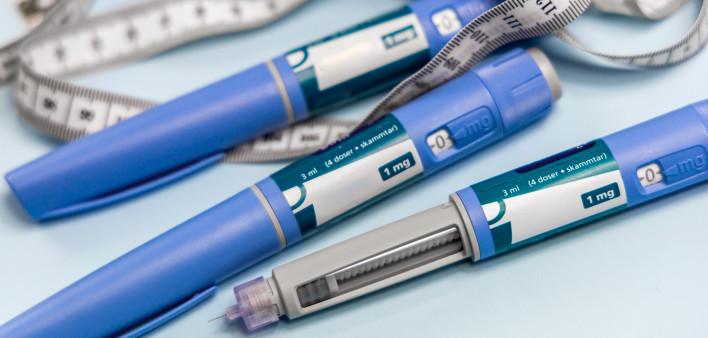
The GLP-1 agonist semaglutide was associated with improvements in a variety of biomarkers of cardiovascular risk in people with HIV and metabolic dysfunction-associated steatotic liver disease (MASLD), according to the latest results from the Phase II SLIM LIVER study presented at the AASLD Liver Meeting.
SLIM LIVER (ACTG A5371; NCT04216589), sponsored by ACTG, is the first clinical trial to test semaglutide as a treatment for MASLD in people living with HIV. Studies have found that people with HIV are more likely to have fatty liver disease, and they appear to experience more rapid disease progression compared with the population at large. A study from the HIV NASH Clinical Research Network, presented at IDWeek, showed that 10-year cardiovascular risk scores were higher among HIV-positive people with MASLD compared to those without steatotic liver disease.
“This SLIM LIVER analysis provides important insights into the impact of semaglutide on a whole host of cardiovascular biomarkers for people living with HIV and MASLD,” ACTG chair Joseph Eron, MD, of the University of North Carolina, said in a news release. “People living with HIV are at increased risk for cardiovascular disease and they experience MASLD in greater numbers than the general population. ACTG is committed to conducting research that identifies solutions to the comorbidities that most impact people living with HIV and we are encouraged by these results.”
MASLD and its more severe form, metabolic dysfunction-associated steatohepatitis (MASH), are responsible for a growing proportion of advanced liver disease worldwide. Around a third of people in the United States have fatty liver disease, which often occurs in conjunction with obesity, type 2 diabetes and other metabolic conditions. Over time, the buildup of fat in the liver can lead to serious complications, including liver fibrosis, cirrhosis and liver cancer.
SLIM LIVER enrolled HIV-positive people with MASLD who were on suppressive antiretroviral therapy, mostly using integrase inhibitors. They had at least 5% liver fat content according to MRI imaging plus cardiovascular risk factors such as a large waist circumference, insulin resistance or pre-diabetes. Participants self-administered semaglutide injections once weekly for six months.
Semaglutide and other glucagon-like peptide-1 (GLP-1) agonists mimic a natural hormone that suppresses appetite, regulates insulin and blood sugar and slows emptying of the stomach; it also has anti-inflammatory effects. Initially approved for the treatment of type 2 diabetes under the brand name Ozempic, it received an additional FDA nod for management of obesity under the brand name Wegovy. In August, it received a new accelerated approval as a treatment for MASH.
At the 2024 Conference on Retroviruses and Opportunistic Infections (CROI) and in the Annals of Internal Medicine, Jordan Lake, MD, of UTHealth Houston, and colleagues reported primary SLIM LIVER results, showing that liver fat declined by 31%. More than a quarter of participants experienced complete resolution of MASLD at six months. What’s more, they saw significant improvements in weight, waist circumference, insulin resistance and glucose and triglyceride levels. (Related analyses presented at this year’s CROI suggest that semaglutide is associated with slower epigenetic aging, improved cognitive function, a healthier gut microbiome and reduced alcohol use in people with HIV.)
At the Liver Meeting, Lake and colleagues presented results from a SLIM LIVER secondary analysis looking at novel biomarkers of cardiovascular risk. This analysis included 36 participants who had lost at least five pounds. More than half were men, 39% were Latino, about a third were white, 28% were Black and the median age was 52 years. Blood samples from these participants were used to compare lipidomic, lipoprotein and glycoprotein profiles before and after semaglutide treatment.
Semaglutide was associated with reduced levels of triglycerides and diglycerides, especially polyunsaturated forms, and sphingomyelins (a type of lipid present in the myelin sheath that surrounds nerve cell axons). Conversely, some bile acids and phosphatidylcholines (lipids present in cell membranes) increased. Various lipoprotein variants associated with cardiovascular disease decreased.
The researchers also looked at GlycA and GlyB, two biomarkers of inflammation. Among those with elevated GlycA at baseline, 56% saw a reduction and 32% experienced normalization. Among those with elevated GlyB, 41% saw a reduction and 42% normalized. Changes in GlycA correlated with changes in interleukin-6 (an inflammatory cytokine), and changes in total glycoprotein levels correlated with shifts in leptin (a hormone produced by fat cells). However, lipoprotein and glycoprotein concentrations generally did not mirror changes in weight, liver fat content or insulin resistance.
“Among people with HIV and MASLD, lipidomic changes with semaglutide suggest reduced lipotoxicity and hepatic insulin resistance, consistent with MASLD improvement,” the study authors wrote. “Significant reductions in cardiovascular risk-associated lipoprotein and glycoprotein species were observed that did not correlate with changes in weight, intrahepatic triglyceride or insulin resistance, suggesting an independent mechanism.”
“MASLD is increasingly recognized as a major contributor to illness and death among people living with HIV, so identifying treatments that can attenuate its impact is an important priority in HIV research,” Lake said. “While larger studies with clinical endpoints are still needed to optimize cardiovascular risk among people living with HIV and MASLD, these findings are an important first step in understanding the impact of semaglutide among these individuals and have the potential to meaningfully impact their health.”
Click here for more reports from the 2025 Liver Meeting.




Comments
Comments