

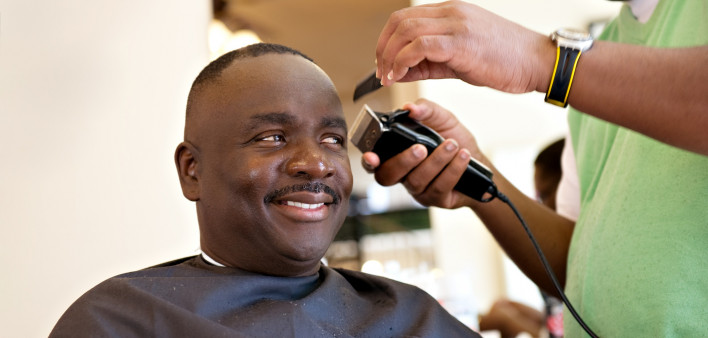
The University of South Carolina’s Community Health Interventions and Resilience Promotion (CHIRP) Lab works to improve health outcomes for minority men by bringing conversations about health to a familiar space: the barbershop. Its eight-week Fade to Fitness program is designed to improve quality of life among Black men through group discussions and activities at barbershops where Black men gather.
“CHIRP Lab primarily works with minorities, specifically Black and Latino men, working on health disparities and how we can create interventions to reduce barriers to healthcare,” Will Turner, a CHIRP Lab research assistant, told WIS10 News. “Our whole total goal, especially in public health, is to figure out how to increase life expectancy.”
In general, men have a lower life expectancy than women. The average life expectancy was higher for women (81.4 years) than men (76.5 years) in 2024, according to the Centers for Disease Control and Prevention. As for life expectancy by race, a KFF analysis showed that in 2023, white people had an average life expectancy of 78.4 years, consistent with the average for the entire population, but Black people had a lower-than-average life expectancy of 74 years. KFF cited differences in health insurance, access to care and socioeconomic factors as drivers for these racial disparities.
Certain diseases also disproportionately affect Black people. Cardiovascular disease is the leading cause of death nationwide, according to the American Heart Association, but 63% of Black men have cardiovascular disease—including coronary heart disease, heart failure, stroke or high blood pressure—compared with 48.9% of the population overall. Black men also have a higher risk of developing prostate cancer. In 2025, Black men were over twice as likely as white men to die of prostate cancer, according to the American Cancer Society. In 2024, Black people were 24% more likely to have diabetes, and in 2022, they were 78% more likely to die of diabetes-related complications than the general population, as reported by the Office of Minority Health.
CHIRP Lab formed the Clean Cuts Sharp Minds Collective—a group of barbers across South Carolina who serve as “empowerment coaches,” encouraging men to take control of their health. Lab members teach barbers how to engage men in discussions about physical and mental health that they may avoid having in more formal healthcare settings. Participants in the program also receive fitness trackers.
“The comfortability in the barbershop versus the professional care places—this is a good starter point here to get you going,” said Terry Woods, a barber participating in the program, in an interview with WIS10. “This is where we have these personal-private conversations that lead you to going to your doctor.”
The CHIRP Lab is currently recruiting both barbers and participants for its Fade to Fitness program. For more information, click here.



Comments
Comments