

When Pauline Decarmo, a painter and art instructor in New York City, went for a regular mammogram in 2017, she “had no symptoms at all” and wasn’t expecting the initial diagnosis: ductal carcinoma in situ (DCIS), also referred to as noninvasive Stage 0 because the cancer hasn’t spread. She didn’t need chemotherapy or radiation, but further tests revealed “crystallizations all over,” she recalls, “and they couldn’t save the right breast.” It was removed, along with several lymph nodes. The plan was to take tamoxifen, a pill, for five years, which is not uncommon for breast cancer, but she elected to stop after experiencing side effects.
But cancer wasn’t done yet. Decarmo—who was born in Guyana, South America, and raised in Queens, New York—says, “In 2021, they found precancerous cells in my uterus. It was a different kind of cancer, so they took out everything, every female part, in a total hysterectomy with salpingo-oophorectomy [removal of Fallopian tubes and ovaries]. Then in April [2025], I was diagnosed with an aggressive type of basal cell carcinoma [a type of skin cancer] that only occurs in about 1% of people of color. It turned out to be a very big part in the back of my head—2 inches and 13 stitches—but they got it all, I hope.”
Decarmo also developed lymphedema, or swelling of the limbs, which got so bad that she couldn’t use her dominant arm to paint. Yet she persevered, transforming her experiences into art. Her work has been displayed in solo and group shows, and she’s currently an adjunct lecturer teaching introduction to drawing and painting at the City College of New York.
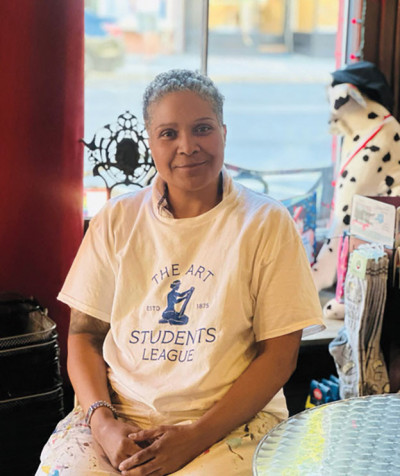
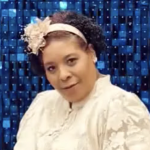
Pauline DecarmoCourtesy of Shannon Greer
In January 2026, Decarmo turns 60, a fact she doesn’t try to hide. “People say, ‘You’re OK sharing that?’ And I’m like, ‘Yes! I’m alive!’” Cancer Health spoke with Decarmo for the latest installment of our Can Heal column—the empowering phrase “Can Heal” is right there in our magazine’s title. Our interview has been edited for clarity and length.
Let’s start with the period after your mastectomy. Tell us about your decision to stop your planned treatment.
I took tamoxifen for several months, but it did not work for me. It caused bad side effects. I felt so awful and couldn’t talk or function or work, and I developed aphasia, where I couldn’t get the words out. It was a terrible experience. I couldn’t take five years of feeling like that and still have a chance cancer could come back. But that’s just me. Other people are fine taking it.
Did you start any cancer treatments after the hysterectomy and the procedure to remove the skin cancer?
No. But after they took lymph nodes [during the breast cancer operation], that caused troubles. I developed lymphedema. With that, you have to be careful and work on your circulation. After the cancer medication, I also developed itching and hives. I still deal with that every day and have to take a cetirizine pill [Zyrtec] once a day.
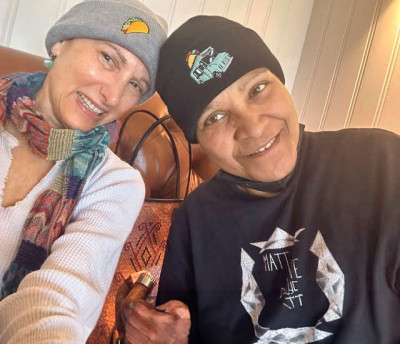
Emily Rubin and Pauline Decarmo
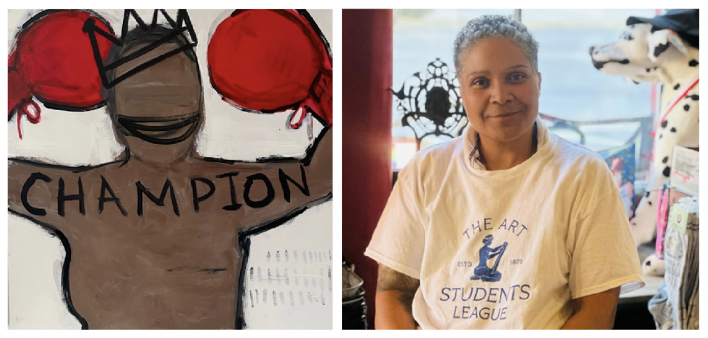
The cover subject of our last issue—Emily Rubin, who shared her current experiences with a second breast cancer diagnosis after 15 years in remission—wrote about being inspired after seeing your painting Champion, which depicts a female boxer with a mastectomy scar. Is that work typical of your style?
I have many styles, but I love drawing figures. When I did that painting—it’s acrylic on wood panel—I was working on a commission and couldn’t do it because I couldn’t paint with my right hand. I got so frustrated I picked up the paintbrush and started another with my left hand. I was feeling so discouraged, so sad and angry. But to me, as long as you’re fighting the battle, you’re a champion. And I want to acknowledge how I feel when I look in the mirror and see myself. I liked my breast and wanted to keep both. But I have to look for the beauty in this new situation. So I have these two parts of me now that I love—like a tomboy and a girl— and I’m in the middle.
Then there’s the Blue Sky painting where I’m leaning against the window, looking at the beautiful blue sky outside my studio, thinking, I have a studio! I was feeling hopeful.

"Blue Sky," 2024Courtesy of Pauline Decarmo
Cancer opened a lot of doors for me because I explored it in my art and people responded to it. People send me emails saying, “I love that painting. I’ve been there. That’s how I feel or how I want to feel.”
Finally, what’s your advice for anyone facing cancer?
Have someone go with you to your appointments to help take notes and pay attention—I’d get nervous and scared I was going to die. And I suggest mental health therapy. I struggled a lot being around people after the surgery because I could tell people were looking at me, and they’d say things like, “Why didn’t you get the other breast removed?” I’d say, “My surgeon said, ‘If it’s not broken, don’t fix it.’”
Be assertive with your doctors. My dermatologist thought the basal cell carcinoma spot was a mole the same color as my skin. I knew my cancer history and should have insisted on a biopsy earlier. Then it would have been caught when it was smaller.
Do physical therapy. Eat well and sleep well. Look into local and community groups for help. BreastCancerOptions.org provides acupuncture once a month for free. It’s absolutely helpful. And I found an $8,000 grant for artists who’ve had life-changing events. I was out of work for a year and a half, and if I don’t paint, I don’t get paid. Also: Take care of yourself. I take walks and practice tai chi and do exercises for my arms. And I socialize a lot and hang out with friends. I’ve got a pretty nice life. It’s simple, but I don’t need a lot. Cancer helped me realize what is necessary and unnecessary.


Comments
Comments